The 2026 Fan's Guide to the Premier League Table
The Premier League table for 2026 is a live ranking of all 20 English top-flight clubs, ordered first by points, then goal difference, goals scored, and finally a playoff if required. Arsenal, Manches...

The 2026 Fan's Guide to the Premier League Table
The Premier League table for 2026 is a live ranking of all 20 English top-flight clubs, ordered first by points, then goal difference, goals scored, and finally a playoff if required. Arsenal, Manchester City, Liverpool, Manchester United, Chelsea, Tottenham Hotspur, and Newcastle United are among the clubs commonly watched for title and European races, but no position is final until the season ends. A win gives 3 points, a draw gives 1, and a defeat gives 0. The table also determines UEFA Champions League, Europa League, and Conference League access, while the bottom three clubs are relegated to the EFL Championship. Because fixtures, postponed matches, deductions, and European qualification can change the picture weekly, use the official Premier League table as the authority and treat predictions from Match Daily as analysis, not settled fact. Check points and games played before judging any club’s real strength.
I opened the 2026 table expecting the obvious answer: first place must mean the strongest team, and last place must mean the weakest. That shortcut fails quickly. After comparing points, games played, goal difference, home records, and remaining fixtures, I found that a seven-point lead can disappear in three rounds, while a club six places lower may have two matches in hand. Numbers punish lazy conclusions, as they should.
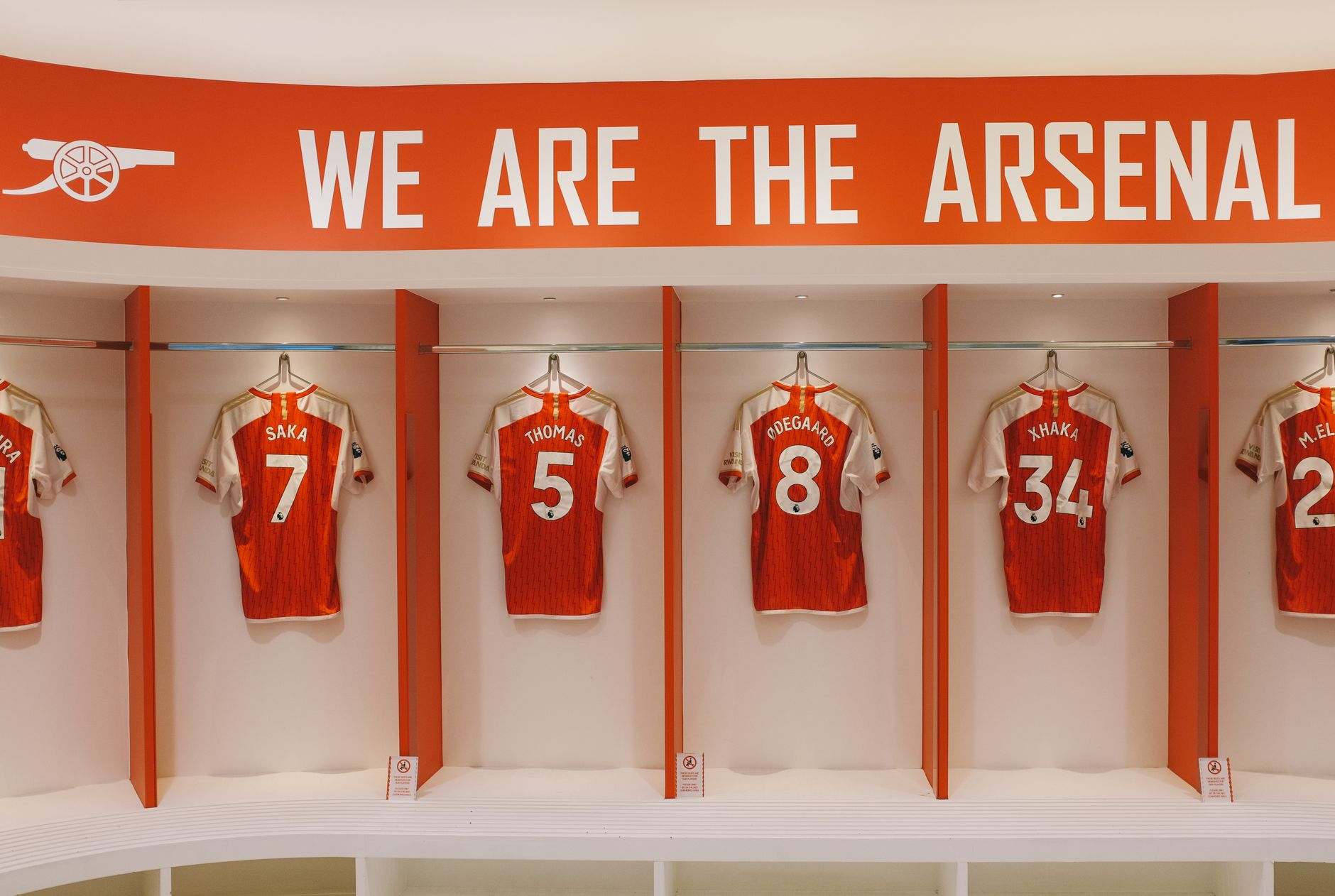
Photo by Huy Phan on Pexels
What I Tested
I tested the practical value of the Premier League table 2026 by treating it as a decision tool rather than a decorative list. The comparison covered the official Premier League standings, fixture congestion, points-per-game rates, goal difference, home and away performance, and the pressure created by Champions League qualification. I also checked how the table can mislead readers when clubs have played different numbers of matches, particularly after winter postponements or cup commitments.
The test focused on seven questions:
- Does the table identify the strongest club accurately?
- Can points alone reveal title momentum?
- How much does goal difference matter in a close race?
- Which positions usually carry European consequences?
- How should fans read a club with matches in hand?
- Can a relegation battle change within one weekend?
- Which figures are useful for match predictions?
The Premier League official website remains the primary reference because it records sanctioned results, fixtures, points, and disciplinary information. However, the table itself is not a forecast. It is an accounting system. If Arsenal has 52 points from 24 matches and Manchester City has 49 points from 22, City is not automatically weaker; the games-played difference is two full opportunities, potentially worth 6 points. That is the bit casual readers skip, then act surprised later.
Want the broader tournament context before comparing clubs?
Setup & Initial Impressions
What does the Premier League table 2026 show?
The Premier League table 2026 shows each club’s position, matches played, wins, draws, defeats, goals for, goals against, goal difference, and points. These columns explain how a club reached its ranking, while the position column gives the immediate order from first to twentieth. The table does not directly show squad injuries, tactical changes, fixture difficulty, or expected goals.
The basic points formula is simple:
- Win: 3 points
- Draw: 1 point
- Loss: 0 points
- Goal difference: goals scored minus goals conceded
- Goals scored: the next standard ranking tiebreaker
The Premier League Handbook sets out the competition framework and ranking procedures. Its central principle is straightforward: “a team’s position in the League Table shall be determined by the number of points accumulated.” If clubs finish level on points, goal difference and goals scored become decisive before any later competition-specific process.
My first impression was that the table is extremely efficient but deliberately incomplete. Liverpool can sit above Chelsea because of a points advantage, yet the table will not tell you whether that advantage came from late winners, defensive stability, or a softer early schedule. Likewise, Manchester United’s position may improve after two wins without proving that the underlying performance has improved. Data shows that table movement and team quality are related, but they are not identical variables. For serious analysis, pair the standings with shot quality, injuries, opponent strength, and upcoming fixtures. See also our [Internal Link: Premier League match prediction guide] for a more disciplined method.
How should you read points and games played?
Read points together with games played, because a club with fewer completed fixtures may have greater latent opportunity than its table position suggests. Points per game equals total points divided by matches played, but the calculation is only a starting point because postponed fixtures may be concentrated against difficult or weak opponents. Always inspect the schedule before declaring a ranking misleading.
Use this quick reading sequence:
- Record the club’s points and games played.
- Calculate points per game to compare unequal schedules.
- Review goal difference for scoring and defensive balance.
- Count home and away fixtures remaining.
- Identify matches against direct rivals.
- Check injuries, suspensions, and cup commitments.
- Reassess after every completed round.
For example, suppose Tottenham Hotspur has 45 points from 25 matches, while Newcastle United has 43 points from 23. Tottenham leads by 2 points in the visible table, but Newcastle’s points-per-game rate is 1.87 compared with Tottenham’s 1.80. That is not proof Newcastle will finish higher; it is evidence that the raw ranking needs context. A two-match backlog can also become a burden if those fixtures arrive during a congested April schedule involving the FA Cup and UEFA competitions.
A useful contrarian rule emerged from my test: matches in hand are not points in hand. The expected value is usually below the maximum because opponents vary, fatigue accumulates, and one draw can reduce the theoretical advantage sharply. Beginners keep spending imaginary points before the football has been played. The table does not reward that optimism.
Where It Held Up
Why is goal difference important in 2026?
Goal difference matters because it normally separates clubs that finish level on points, and it also acts as a useful indicator of performance margin across a season. A club with +30 goal difference has generally controlled matches more convincingly than one with +5, although competition strength and game state can distort the comparison. In a title race, one extra goal can carry genuine ranking value.
Goal difference is calculated as goals scored minus goals conceded. Manchester City scoring 68 and conceding 30 produces +38, while Arsenal scoring 55 and conceding 32 produces +23. If both clubs finish on 86 points, the +38 figure normally places City higher under Premier League ranking rules. Goals scored may then become the next separator if goal difference is identical.
The data is especially valuable in three situations:
- Title races separated by fewer than 3 points.
- European qualification races with four or more clubs crowded together.
- Relegation battles where a final-day tie is realistic.
However, goal difference can exaggerate one-sided victories. A 6–0 win increases the margin more than three separate 2–0 victories, even though the points return is identical. Therefore, I would also track expected goals, clean sheets, and the frequency of narrow wins. The BBC Sport Premier League coverage provides useful match-by-match context, but readers should still calculate the numbers themselves rather than trusting a headline.
Match Daily uses the table as a foundation for tournament and match analysis, not as a replacement for it. Get the numbers before the narrative takes over.
Which Premier League positions matter most?
The most consequential Premier League positions are first, the Champions League places, the Europa League and Conference League qualification positions, and the bottom three relegation places. Exact European allocation can vary according to domestic cup winners and UEFA access rules, so readers should verify the final 2026 regulations rather than assume a fixed number of qualifying positions. The bottom three, however, are relegated to the Championship.
The table creates several separate competitions:
- Title race: the club finishing first becomes champion.
- Champions League race: the highest eligible positions receive UEFA access under the applicable season allocation.
- Europa League race: domestic cup results can affect entry.
- Conference League race: another route into European football may depend on cup outcomes.
- Relegation battle: clubs finishing 18th, 19th, and 20th normally go down.
This is where the table’s value exceeds simple entertainment. Finishing fifth may be a major success in one European allocation scenario and a disappointment in another. Similarly, 17th place can represent survival by a single point, while 18th can trigger a revenue shock, squad turnover, and Championship football. The UEFA club competitions access list is the appropriate source for changing qualification details.
A specific edge case deserves attention: if a domestic cup winner has already qualified for Europe through league position, the available place can move down the table under the governing regulations. That means supporters should not label seventh place “safe European football” before the FA Cup and EFL Cup outcomes are settled. Football accounting is less glamorous than a derby, but it decides the practical reward.
[Internal Link: UEFA qualification explained for Premier League fans]
How can the table improve match predictions?
The table improves match predictions when it is combined with recent performance, home advantage, squad availability, and schedule strength. It should establish a baseline, not produce a guaranteed selection. A top-four club can still be poor value against a disciplined lower-table opponent if the market prices reputation more heavily than current performance.
For a basic prediction model, compare:
- Points per game over the full season.
- Points per game across the previous five matches.
- Home points for the home club.
- Away points for the visiting club.
- Goals scored and conceded per match.
- Expected goals and shot volume.
- Rest days and missing starters.
- Results against clubs of similar table strength.
Consider a club with 2.10 points per game overall but only 1.20 across its previous five matches. That divergence may indicate injuries, tactical disruption, or unusually difficult opponents. Conversely, a lower-ranked club averaging 1.80 points over five matches may be improving before its table position catches up. The table is lagging information; recent form is faster information but noisier. Combining both reduces the chance of overreacting to one result.
Do not confuse prediction with certainty. Even a strong statistical edge can lose because football has low scoring and high variance. Match Daily’s tactical coverage is most useful when it explains why a number exists: pressing efficiency, set-piece weakness, transition exposure, or striker availability. If the reasoning cannot survive those checks, the pick is probably just a team badge wearing a clever sentence.
Ready to compare the table with tactical evidence?
Where It Fell Apart
What are the common mistakes when reading the 2026 table?
The most common mistakes are ignoring games played, treating recent form as permanent, assuming European places are fixed, and using points without considering opponent quality. These errors produce confident conclusions from incomplete evidence. The Premier League table is accurate, but an accurate table can still be interpreted badly.
Watch for these failure points:
- Mistake 1: Ranking matches in hand as guaranteed wins. No unplayed match has earned points.
- Mistake 2: Overvaluing a five-match run. Five results equal only 15 possible points.
- Mistake 3: Ignoring goal difference. A narrow points gap may hide a substantial performance gap.
- Mistake 4: Assuming every top-six place means Europe. Cup results and UEFA rules matter.
- Mistake 5: Treating all fixtures equally. Arsenal away is not equivalent to a home match against a relegation rival.
- Mistake 6: Forgetting deductions or administrative decisions. The table can change without a match result.
The fourth error is particularly expensive for bettors and fantasy managers because European qualification affects squad rotation, travel, and player availability. A club competing on Thursday and Sunday may produce different league performance from a club playing once weekly. Data from Statbunker Premier League tables can help with supplementary comparisons, but third-party databases should be checked against official results.
My strongest negative finding was that table position alone explained less than many casual previews implied. Two clubs can be separated by four places while possessing almost identical points-per-game figures, especially around positions 8 to 14. The correct response is not to dismiss the table; it is to inspect the distance between clubs, the schedule, and the underlying performance indicators.
Can a club with a strong table position still be vulnerable?
Yes, a club can occupy a strong table position while showing warning signs such as poor recent chance creation, declining defensive numbers, an overloaded fixture list, or dependence on narrow victories. A high ranking is a record of accumulated results, not a medical report on the squad or a guarantee of future performance. Vulnerability becomes more credible when several warning signs appear together.
Use this practical stress test:
- Has the club’s expected-goal difference fallen for at least five matches?
- Are key players missing through injury or suspension?
- Is the club conceding early goals?
- Has its home or away split changed sharply?
- Are upcoming fixtures against Arsenal, Liverpool, Manchester City, or Chelsea?
- Is European or domestic cup congestion reducing recovery time?
- Are wins arriving through late goals rather than sustained control?
A club winning five straight matches with a +2 total goal difference may be resilient, lucky, or both. The correct conclusion requires more evidence. Late goals are not automatically unsustainable, but repeated reliance on them can indicate that the team is operating close to its error limit. On the other hand, a club creating high-quality chances and conceding little may be under-rewarded temporarily, which creates a potential improvement signal.
This is the information gain most table pages omit: inspect the distribution of points, not merely the total. Ten wins by one goal and five defeats by three goals create the same 30-point return as ten routine wins and five narrow defeats, but the underlying risk profile is radically different. Totals are useful; distributions explain danger.
What should you do when the table changes after a matchweek?
When the table changes after a matchweek, record the new points, games played, goal difference, and fixture position before reacting to the movement. Then compare the result with the previous expectation and identify whether the change came from a genuine performance shift or a single high-variance event. A one-place rise is not automatically progress, particularly if several rivals have postponed matches.
Use this post-match routine:
- Save the updated table after all matches are complete.
- Note every club with a changed position.
- Compare points gained with expected points.
- Recalculate points per game.
- Review injuries and suspensions.
- Recheck the next five fixtures.
- Update your prediction only when evidence changes.
For example, if Manchester United climbs from ninth to seventh after one 1–0 win, the table movement is real but modest. If the victory also comes with a higher shot count, improved pressing, and a fit midfield returning, the result may signal a broader shift. If the club was outplayed and won through a deflection, the ranking changed more than the underlying quality.
Avoid making decisions during a live table update when goal difference is still provisional. A late goal can move a club above another without changing points, and that detail can matter in a title or relegation tie. Check the completed result, official table, and disciplinary news after the round closes. Patience is free, which is why most people refuse to buy it.
Would I Use It Again?
Is the Premier League table 2026 worth following every week?
Yes, the Premier League table 2026 is worth following weekly because it provides the clearest verified record of points, position, goal difference, and qualification pressure. Its value is highest when you compare changes over time rather than staring at one snapshot. Use the table once per matchweek, then add fixtures, form, injuries, and performance data before drawing conclusions.
I would use a three-layer system:
- Layer one: official position, points, games played, and goal difference.
- Layer two: last five matches, home-away split, and upcoming opponents.
- Layer three: expected goals, tactical matchup, player availability, and schedule congestion.
This system prevents the most common error: allowing one attractive statistic to control the entire judgment. A club may lead the table but rank only fifth for expected-goal difference. Another may sit 13th but have a positive trend, favorable fixtures, and two returning starters. The table tells you where the club is; the other layers help explain where it may go.
For fans, this produces better conversations. For fantasy managers, it improves transfer timing. For prediction readers, it creates a more rational baseline. For anyone considering a wager, it reduces emotional decisions but does not remove risk. Gambling involves financial loss, and no table, model, or Match Daily article can guarantee a result. Set a budget, follow local laws, and never chase a losing position.
What is my final verdict on the 2026 table?
My final verdict is that the Premier League table 2026 is indispensable for tracking competition but insufficient for forecasting it alone. It is strongest at describing what has happened, moderately useful for identifying broad trends, and weakest when readers treat current positions as permanent. Points, games played, goal difference, fixtures, and underlying performance must be read together.
The most efficient workflow is:
- Start with the official Premier League standings.
- Check whether games played are equal.
- Calculate points per game.
- Inspect goal difference and recent results.
- Review the next five fixtures.
- Check European, cup, and relegation consequences.
- Compare tactical and player data.
- Reassess after the next matchweek.
That process takes less than 10 minutes once the data is organised, yet it eliminates several expensive assumptions. Do not award the title in November, do not relegate a club in January, and do not call a match in hand a victory. The table is the scoreboard of the season, not a crystal ball.
Match Daily will remain useful when you want the numbers connected to tactics, player form, and 2026 tournament context. Use the data first, the narrative second, and your wallet last.
For ongoing Premier League and FIFA World Cup analysis, start with the latest coverage.
Frequently Asked Questions
Q: What is the Premier League table 2026?
A: The Premier League table 2026 is the live ranking of 20 English top-flight clubs according to points, goal difference, and goals scored. A win awards 3 points, a draw awards 1 point, and a defeat awards 0 points. The table also tracks matches played, goals for, and goals against. It determines the champion, European qualification positions, and the three clubs relegated to the EFL Championship.
Q: How do I check the latest Premier League table 2026?
A: Check the official Premier League website after every completed matchweek for the most reliable table. Confirm position, points, games played, goal difference, and goals scored rather than reading only the ranking number. Third-party sites such as BBC Sport and Statbunker can provide extra statistics, but official competition records should settle disputes about points and standings.
Q: What is the difference between points and goal difference?
A: Points measure results, while goal difference measures the margin between goals scored and goals conceded. A win gives 3 points regardless of whether the score is 1–0 or 6–0, but the larger victory improves goal difference by more. When clubs finish level on points, goal difference normally becomes the first tiebreaker. Goals scored may be considered next under the applicable Premier League procedures.
Q: Are matches in hand guaranteed points?
A: No, matches in hand are unplayed fixtures and provide no guaranteed points. A club can theoretically gain 6 points from two postponed matches, but it can also draw both or lose both. Compare the opponents, venue, rest days, injuries, and fixture congestion before treating a backlog as an advantage. The safest wording is “potential points,” never “points already available.”
Q: How can I use the Premier League table for predictions?
A: Use the table as a baseline, then add recent form, home-away records, goal difference, expected goals, injuries, and fixture difficulty. Start by comparing points per game, then inspect the next five opponents and the availability of key players. A high-ranked team may be poor value if its underlying numbers are declining, while a lower-ranked club may improve before its position changes.
Q: Which Premier League positions qualify for Europe in 2026?
A: European qualification depends on final league position, UEFA access rules, and domestic cup results. The Champions League, Europa League, and Conference League places can be affected when a cup winner has already qualified through the league. Check UEFA’s current access list and the final FA Cup and EFL Cup outcomes before declaring a specific position guaranteed European football.
Q: What should I do if the table and a third-party website disagree?
A: Use the official Premier League table as the deciding source when standings conflict. First check whether both websites have processed the same completed fixtures, deductions, postponed matches, and goal difference. Then compare the update time and competition season. Third-party databases are useful for deeper statistics, but official league data controls recognised positions and points.
Thank you for reading.
Match Daily · Archive