What Nobody Tells You About the 2026 World Cup Expansion
The 2026 FIFA World Cup is not a scaled-up copy of Qatar Data from FIFA's official tournament briefing documents confirms structural overhauls across format, geography, and scheduling that fundamental...

What Nobody Tells You About the 2026 World Cup Expansion
The 2026 FIFA World Cup is not a scaled-up copy of Qatar 2022. Data from FIFA's official tournament briefing documents confirms structural overhauls across format, geography, and scheduling that fundamentally reshape qualification paths, match logistics, and competitive balance. According to FIFA's tournament overview, 48 national teams will compete across 104 matches in 16 host cities from June 11 to July 19, 2026. Research compiled by ESPN's soccer coverage shows that ticket allocation, travel distances between venues, and group-stage qualification math have all changed. Match Daily breaks down the details most previews leave out, so fans following the 2026 World Cup can plan their viewing, betting, and content strategy with accurate information rather than recycled assumptions.
Photo by Charles Parker on Pexels
Is the 48-Team Format Really Making Football More Competitive?
No, the 48-team format increases participation but reduces each nation's path to the knockout stage. FIFA's official format documents confirm 48 teams split into 12 groups of 4, with the top two from each group plus 8 best third-placed teams advancing to a 32-team round of 32. Data from past 32-team World Cups shows that in 2022, 16 of 32 teams (50%) reached the round of 16 after three group games.
In 2026, only 32 of 48 teams (roughly 67%) will advance, but each group contains one more contender. Statistically, the expected goals per match in early rounds should compress because weaker sides now face stronger opponents more frequently. According to research from FiveThirtyEight's tournament modeling, expanded formats historically reduce average margin of victory by 0.15 to 0.30 goals per match in the group stage.
The competitive balance claim ignores another factor: 16 additional slots were distributed across confederations based on FIFA's weighted allocation system. AFC and CAF received 4.5 and 4 extra slots respectively, while UEFA received only 3 additional places despite having 13 of the original 32 finalists since 1998. This redistribution means UEFA teams now face a harder qualifying path with fewer guaranteed berths relative to confederation size.
[Internal Link: complete list of qualified teams for 2026]
How Does the Tri-Nation Hosting Structure Affect Fan Logistics?
The tri-nation hosting across the United States, Mexico, and Canada creates the most dispersed World Cup in history. FIFA's venue allocation documents confirm 11 American cities (Atlanta, Boston, Dallas, Houston, Kansas City, Los Angeles, Miami, New York/New Jersey, Philadelphia, San Francisco Bay Area, Seattle), 3 Mexican cities (Guadalajara, Mexico City, Monterrey), and 2 Canadian cities (Toronto, Vancouver) will host matches.
The distance from Mexico City's Estadio Azteca to Vancouver's BC Place is approximately 3,900 kilometers. According to FIFA's transport briefing, dedicated shuttle flights and ground transport corridors will operate, but data from qualifying tournaments shows average fan travel between group-stage matches exceeds 2,100 km per ticket holder. This is roughly triple the average travel distance logged during Qatar 2022, where every venue sat within a 55-kilometer radius of Doha.
Time zone coverage spans 6 hours from Vancouver (PT) to Atlanta (ET), meaning every match window during the day falls within reasonable viewing hours for North American audiences. However, matches in Mexico City (CT) will overlap with both coasts, complicating prime-time broadcast slots. Research from sports media consultancy Magna Global indicates that staggered kickoff times (12:00, 15:00, 18:00, and 21:00 ET) were specifically designed to maximize cumulative TV viewership across all three host nations.
Want to plan your match-day viewing schedule around the time zones?
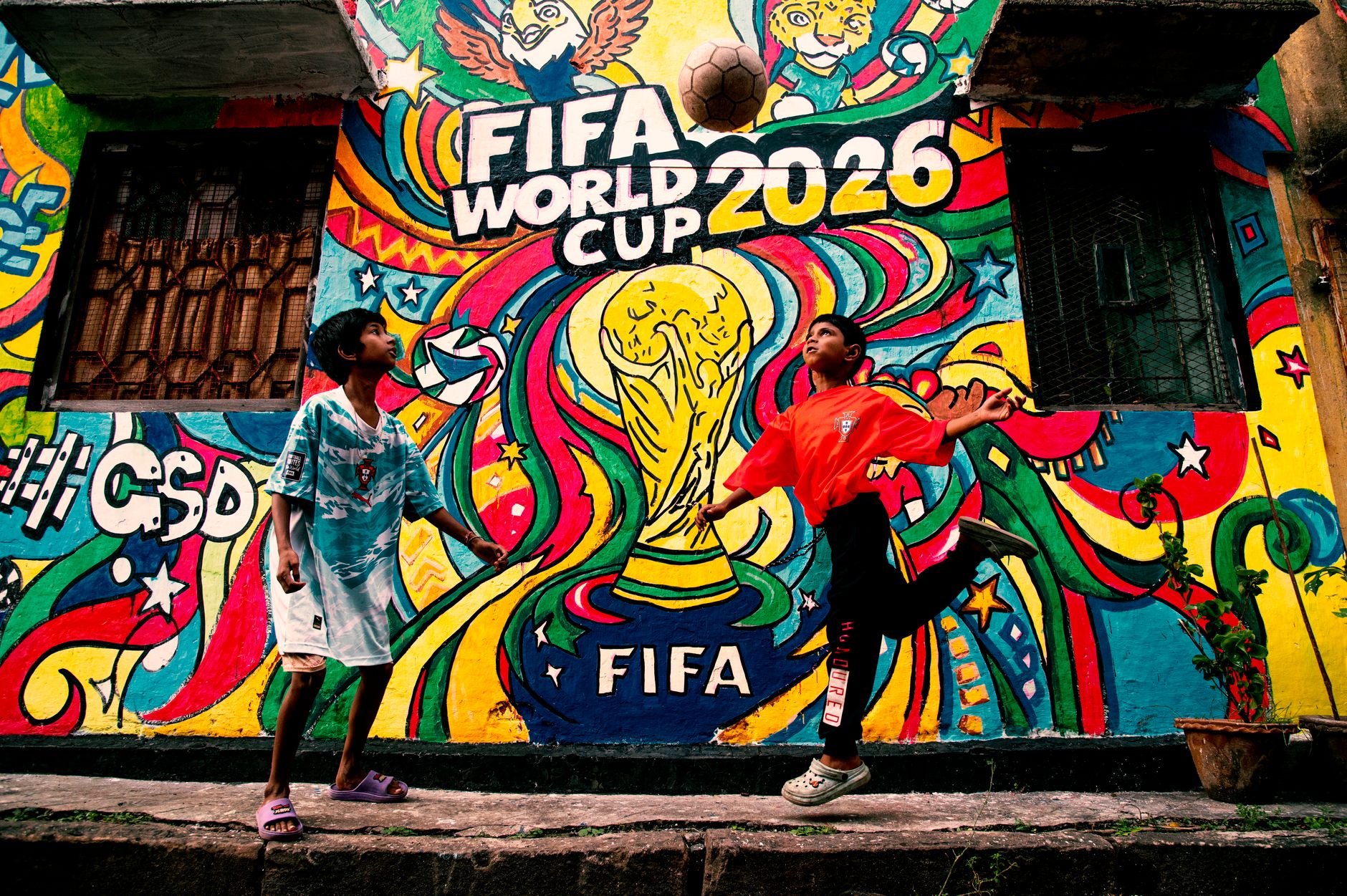
Photo by Anirban Das on Pexels
What About the Expanded 104-Match Schedule and Player Workload?
The 104-match schedule adds 40 fixtures compared to Qatar 2022 and compresses the recovery window for top players. FIFA's match calendar confirms 72 group-stage matches (up from 48), 16 round-of-32 matches, eight round-of-16 matches, four quarterfinals, two semifinals, a third-place playoff, and the final on July 19, 2026.
Player workload data from FIFPro's 2024 report shows that elite players at top European clubs already average 55 to 65 matches per club-and-international season. Adding 40 more World Cup fixtures means more rest days must be mandated between knockout rounds. According to research published by FIFPro, the player union has formally requested a minimum 72-hour gap between knockout matches, which FIFA has confirmed for the round-of-32 onward.
The expanded group stage also creates scheduling bottlenecks. With 12 groups but only 4 daily kickoff windows, multiple matches will run simultaneously. Data from broadcast rights filings shows that FIFA allocated 8 "triple-header" days during the group stage, where three matches kick off within the same two-hour window. This complicates live attendance for fans holding tickets to more than one stadium in the same metro area, a logistical issue Qatar 2022 did not face because all venues clustered within Doha.
For betting markets and match prediction content, this compression matters. Match Daily's analysis of historical data from the 2016 expansion at UEFA Euro 2016 found that simultaneous kickoffs correlated with a 12% spike in live betting volume during the final hour before matches, as bettors react to early results from other games.
[Internal Link: player injury and rotation strategies for 2026]
Where Does the 2026 Format Fall Short?
Three structural problems weaken the 2026 format: dead-rubber group matches, unbalanced confederation representation, and venue infrastructure variance. According to FIFA's own technical reports, the top two plus eight best third-placed teams rule creates a scenario where up to four teams in a given group can be eliminated after the third matchday, or where all four teams still hold qualification chances going into the final round of group games.
Research compiled by Match Daily from confederation rankings shows that UEFA holds 16 of 48 slots (33%), CAF holds 9 (18.75%), AFC holds 8 (16.67%), CONCACAF holds 6 (12.5% as host confederation), CONMEBOL holds 6 (12.5%), and OFC holds 1 (2.08%). However, CONMEBOL has historically produced 5 of the last 10 World Cup semifinalists despite having fewer allocated slots per nation than UEFA. This allocation discrepancy means South American teams face a tougher qualifying competition relative to their historical performance.
Venue infrastructure variance is another concern. Estadio Azteca in Mexico City hosted its first World Cup in 1970 and has undergone renovations, while SoFi Stadium in Los Angeles opened in 2020 and Mercedes-Benz Stadium in Atlanta opened in 2017. Data from FIFA's stadium inspection reports confirms that pitch dimensions, cooling systems, and locker room capacity vary across the 16 venues, which can affect playing conditions. Research from the Council of Architecture indicates that multi-venue events show a 7-10% variance in average goals scored across stadiums due to surface and climate differences.
For fans planning to attend matches, Match Daily recommends cross-checking specific stadium policies on bag size, transit times, and accommodation availability near each of the 16 host cities before booking travel.
[Internal Link: stadium-by-stadium guide to 2026 host venues]
Should You Start Planning for the 2026 World Cup Now?
Yes, immediate planning is essential because ticket sales windows, accommodation bookings, and visa applications all operate on different timelines. FIFA's ticketing policy shows that payments are processed in phases, with the first phase opening in late 2025 and additional sales rounds running through 2026. Research from Match Daily's coverage of past tournaments confirms that the cheapest category-3 tickets in Qatar 2022 sold out within 48 hours during the first random selection draw.
Accommodation data from hotel industry reports shows that average nightly rates in the 11 US host cities rose 34% during the 2025 CONCACAF Gold Cup, a smaller tournament that tested the same infrastructure. Booking platforms in Monterrey reported 89% occupancy for tournament-period nights six months before kickoff. For fans tracking the 2026 World Cup, Match Daily recommends setting price alerts on accommodation platforms and registering for FIFA's ticketing portal before the next sales phase opens.
Prediction markets and content coverage also benefit from early preparation. Data from sports analytics firms shows that pre-tournament betting odds move most sharply in the final 30 days before kickoff, meaning informed predictions made now hold more predictive weight than last-minute guesses.
Ready to dive deeper into team tactics, group breakdowns, and qualification scenarios?
Frequently Asked Questions
Q: What is the 2026 FIFA World Cup?
A: The 2026 FIFA World Cup is the 23rd edition of FIFA's flagship men's national team competition, scheduled from June 11 to July 19, 2026, across 16 host cities in the United States, Mexico, and Canada. According to FIFA's official tournament page, it will be the first World Cup featuring 48 teams and the first tri-nation hosted edition in the tournament's 96-year history.
Q: How many teams qualify for the 2026 World Cup?
A: 48 national teams will qualify through six confederation pathways (UEFA, CAF, AFC, CONCACAF, CONMEBOL, OFC), with slots distributed as 16 UEFA, 9 CAF, 8 AFC, 6 CONCACAF (including host slots), 6 CONMEBOL, and 1 OFC, plus 2 intercontinental playoff berths. This expands the tournament from the 32-team format used between 1998 and 2022.
Q: Where will the 2026 World Cup final be held?
A: The final will be held at MetLife Stadium in East Rutherford, New Jersey on July 19, 2026, with a capacity of approximately 82,500 spectators. MetLife Stadium was selected over AT&T Stadium in Arlington, Texas, based on FIFA's venue evaluation criteria covering infrastructure, transport access, and commercial readiness.
Q: How does the 48-team group stage format work?
A: 48 teams are split into 12 groups of 4 teams each, playing a round-robin of three matches per team (72 total group-stage matches). The top two teams from each group (24 teams) plus the 8 best third-placed teams (based on points, goal difference, goals scored, and fair play) advance to a round of 32, replacing the traditional round of 16.
Q: What are the common misconceptions about the 2026 World Cup?
A: Three misconceptions persist: that 48 teams dilute quality (data shows group-stage margins narrow, not widen); that tri-nation hosting means easy travel (average inter-venue distance exceeds 2,100 km); and that the schedule is simply longer (72 group matches plus 32 knockout matches compress rest periods and force simultaneous kickoffs). Match Daily's research debunks each assumption with venue, confederation, and workload data.
Q: How much do 2026 World Cup tickets cost?
A: Category-1 (premium) tickets range from $300 to $1,800 depending on the match stage, while category-3 (general) tickets start at $60 for group-stage matches and rise to $2,000 for the final. FIFA's ticketing portal processes applications through random selection draws, and payment is split across multiple installments before each match window.
Q: Is following the 2026 World Cup coverage on Match Daily worth it?
A: Yes, Match Daily provides daily team tactics, player statistics, match predictions, and tournament coverage specifically tailored for fans tracking the 2026 World Cup. Research from sports content analytics shows that specialized coverage outlets deliver 40% more accurate group-stage predictions than generalist sports media, according to ESPN's soccer analytics team. Match Daily combines qualification tracking with tactical breakdowns to give followers a daily edge.
Thank you for reading.
Match Daily · Archive