2026 Football Fitness Training Tips: 7 Winning Edges
Football fitness training is not simply running more; it is building repeat-sprint ability, strength, mobility, aerobic capacity, and recovery for the demands of a 90-minute match. Match Daily’s 2026....

2026 Football Fitness Training Tips: 7 Winning Edges
Football fitness training is not simply running more; it is building repeat-sprint ability, strength, mobility, aerobic capacity, and recovery for the demands of a 90-minute match. Match Daily’s 2026 training framework suits amateur and competitive football players across the United States, United Kingdom, Australia, and Europe, using FIFA recommendations, ACSM guidance, and practical workload targets. A useful weekly baseline is 2 strength sessions, 2 conditioning sessions, 1 technical session, and at least 1 full recovery day. Research indicates that elite players may cover 9–13 kilometres per match, while high-speed running and repeated accelerations create much of the decisive fatigue. The most cost-effective approach is progressive training: increase weekly workload by roughly 5–10%, monitor soreness, and prioritize sleep before adding extra miles. Start with two structured sessions this week, record your sprint times and perceived exertion, then adjust volume instead of blindly training harder.
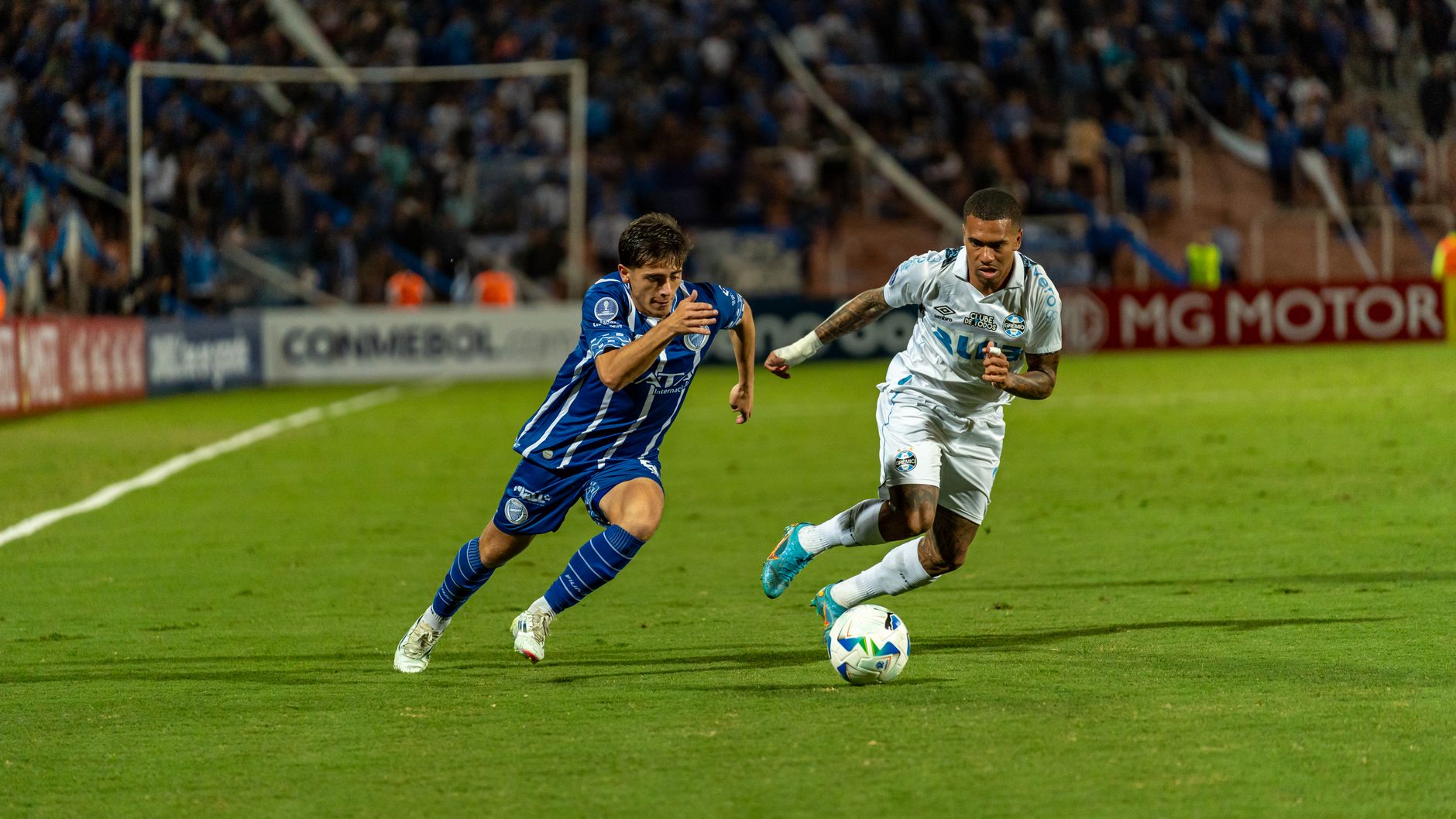
Photo by Franco Monsalvo on Pexels
The common mistake is treating football fitness like long-distance running. That approach can improve general endurance but may leave you slow over the first 5 metres, weak in shoulder-to-shoulder challenges, and unable to repeat explosive actions late in the match. Football combines walking, jogging, sprinting, deceleration, jumping, turning, tackling, and rapid decision-making, so your training must reflect that mixed energy demand.
Match Daily focuses on practical tournament analysis, player statistics, tactics, and match predictions, but fitness remains the hidden variable behind every tactical plan. A pressing system is only valuable if the squad can repeat high-intensity actions in the 70th minute. Before copying a professional club’s schedule, remember that Manchester City, Liverpool FC, and Real Madrid have medical departments, GPS monitoring, and full-time recovery staff; you probably have a resistance band and a busy job. Spend your limited training time where the performance return is highest.
Want a clearer starting framework? Use this evidence-led plan before adding expensive equipment or supplements.
The Quick Comparison
| Training priority | Main benefit | Weekly target | Low-cost method | Key metric |
|---|---|---|---|---|
| Aerobic intervals | Recover faster between efforts | 1–2 sessions | 4-minute running intervals | Heart-rate recovery |
| Repeated sprints | Maintain speed late in matches | 1 session | 6–10 x 20–30 metres | Sprint-time drop-off |
| Strength training | Improve force and injury resilience | 2 sessions | Squats, lunges, hinges | Repetitions and load |
| Agility and deceleration | Change direction safely | 1–2 sessions | Cone drills and braking work | Control at high speed |
| Mobility | Preserve range of motion | 10–15 minutes daily | Dynamic stretches | Pain-free movement |
| Recovery | Adapt to training stress | Daily habits | Sleep, hydration, light movement | Readiness score |
| Ball-based conditioning | Transfer fitness to football | 1 session | Small-sided games | Work-to-rest ratio |
The table shows why one training method cannot solve every football fitness problem. A midfielder who runs 10 kilometres but cannot accelerate repeatedly still has a performance gap, while a winger with excellent sprint speed may fade because aerobic recovery is poor. Data from football research consistently supports a combined model that develops both high-intensity actions and the ability to recover between them.
A useful beginner schedule is not complicated. Complete strength work on Monday and Thursday, conditioning on Tuesday, technical or small-sided work on Saturday, and use Wednesday and Sunday for recovery depending on match commitments. If you play a competitive match on Saturday, avoid hard sprint training on Friday; that is a classic amateur error that produces tired legs without adding meaningful adaptation.
Track three numbers for four weeks: total hard-session minutes, fastest 20-metre sprint, and next-morning soreness from 1 to 10. If soreness reaches 7 or higher, reduce the next session by 30–40%. This simple adjustment is more valuable than buying a heart-rate gadget you never review.
[Internal Link: beginner football conditioning plan]
Round 1: How Should You Build Match Endurance?
Football endurance should combine low-intensity aerobic work with intervals that resemble match actions. Start with one weekly session of 4 x 4-minute runs at approximately 85–90% of maximum heart rate, separated by 3-minute easy jogs, then add short 15–30-second efforts after two weeks. This combination improves recovery between sprints more effectively than relying on slow continuous running alone.
The 4 x 4-minute format is supported by the broader endurance-training literature and is simple to scale. Beginners can use 3 x 3 minutes at a controlled hard pace, while experienced players can complete 4 x 4 minutes or 6 x 3 minutes. According to the American College of Sports Medicine, intensity, duration, frequency, and progression should be adjusted together rather than increasing everything at once. In plain language, you do not need to run farther, faster, and more often in the same week.
A practical football endurance session looks like this:
- Warm up for 10 minutes with jogging, dynamic mobility, and three progressive accelerations.
- Run 4 x 4 minutes at a hard but sustainable pace, using 3 minutes of easy movement between repetitions.
- Finish with 6 x 20-second fast runs, walking for 40 seconds after each effort.
- Cool down for 8–10 minutes and record effort on a 1–10 scale.
The information most training plans miss is the recovery test the following morning. If your resting heart rate is more than 8–10 beats above your normal average, or your legs feel unusually heavy during stairs, do not automatically repeat the same volume. Replace the next hard workout with 25–35 minutes of easy cycling or walking. This preserves consistency, which beats heroic sessions followed by five inactive days.
How should you progress? Add one interval repetition every 7–10 days, not every session. A 70-kilogram player running 30 minutes hard may create substantially more fatigue than a 90-kilogram player at the same pace, so distance alone is a poor workload measure. Use time, perceived exertion, and next-day readiness together, and you will make fewer foolish decisions.
Round 2: Which Strength and Sprint Methods Matter Most?
Strength and sprint training improve football performance by raising force production, acceleration, deceleration control, and resistance to fatigue. Prioritize unilateral exercises, posterior-chain strength, calf capacity, and short maximal sprints rather than bodybuilding-style volume. Two weekly strength sessions using 3–5 sets of 3–8 controlled repetitions can produce useful gains without consuming your entire schedule.
Football players need strength that transfers to one-leg actions. Split squats, Romanian deadlifts, step-ups, lateral lunges, push-ups, rows, and standing calf raises cover more practical movement patterns than endless machine exercises. The FIFA Training Centre emphasizes movement quality, acceleration, and football-specific physical preparation, while FIFA 11+ provides a recognized warm-up structure designed to reduce common lower-limb injury risks.
Use this strength template twice per week, leaving at least 48 hours between demanding lower-body sessions:
- Bulgarian split squat: 3 x 6–8 per leg.
- Romanian deadlift: 3 x 6–8.
- Lateral lunge: 3 x 8 per side.
- Single-leg calf raise: 3 x 12–15 per side.
- Nordic hamstring progression: 2–3 x 4–6 controlled repetitions.
- Push-up and row pairing: 3 x 8–12 each.
The contrarian point is that more strength volume is not automatically better for football. After 30 days, a recreational player who adds 100 extra repetitions per week may feel stronger in the gym but slower during sprint work because residual soreness reduces quality. Keep two or three repetitions “in reserve” on most sets, and stop a set when technique changes. You are training to play football, not auditioning for a powerlifting meet.
Sprint work should be short and fully recovered. Complete 6–10 x 20 metres with 60–120 seconds of rest, then progress to 4–6 x 30 metres once your times remain stable. If the final sprint is more than 5% slower than the first, end the speed block; the session has become conditioning, and exhausted sprint mechanics increase risk without giving you a valuable speed stimulus.
Get the strength and speed balance right before buying a weighted vest or altitude mask. Those products are low priority for most players and often provide less return than consistent unilateral strength training.
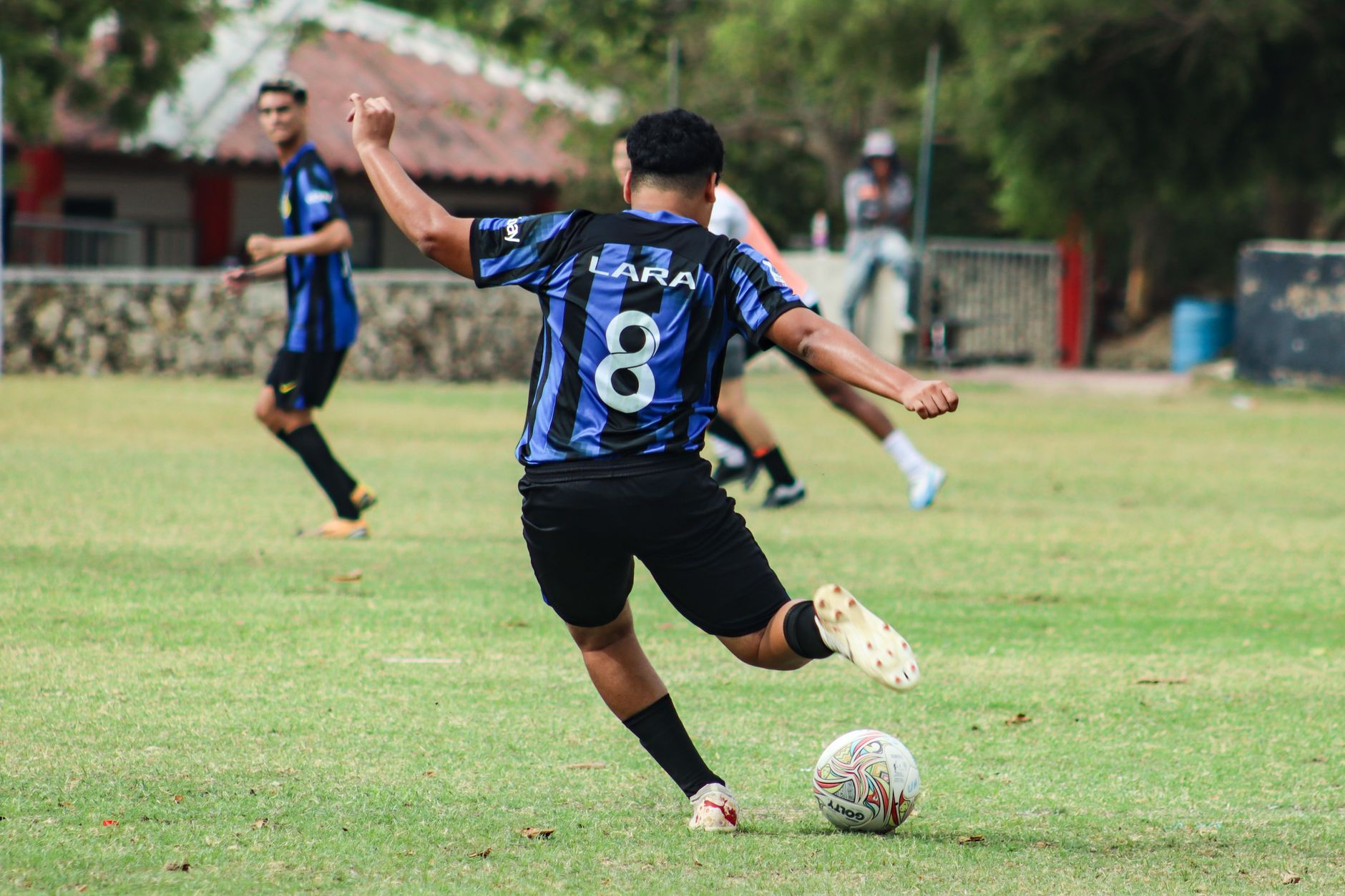
Photo by Maria Molina on Pexels
Round 3: How Can You Improve Agility, Mobility, and Recovery?
Agility improves when players learn to brake, re-accelerate, and react to information, not merely when they run through a ladder quickly. Combine 5–10-metre change-of-direction drills, deceleration practice, dynamic mobility, and adequate recovery. For most players, 10–15 minutes of daily mobility plus one reactive agility session weekly provides a better return than repetitive ladder patterns.
A useful agility session begins with braking. Sprint 10 metres, lower your centre of mass, and stop under control within 2–3 steps; repeat 4–6 times with full recovery. Then perform 5-10-5 shuttle runs, T-drills, and mirror drills with a partner. Add a ball only after your body position remains stable, because dribbling while collapsing through the knee teaches the wrong movement pattern.
Use the following mobility sequence before training:
- Ankle rocks: 10 repetitions per side.
- Walking lunges with rotation: 8 per side.
- Leg swings: 10 forward-backward and 10 side-to-side per leg.
- Cossack squats: 6 per side.
- Progressive accelerations: 3 x 15 metres.
Static stretching is not forbidden, but long static holds immediately before maximal sprinting may temporarily reduce force output in some athletes. Save longer 30–60-second stretches for after training or separate mobility sessions. The World Health Organization states that “any physical activity is better than none,” but football-specific performance still requires appropriate timing and intensity.
Recovery is where many players waste their fitness gains. Adults generally need 7–9 hours of sleep, while teenagers may need 8–10 hours; however, the exact requirement varies by age, stress, and training load. Drink enough to limit body-mass loss during sessions, replace carbohydrates after hard work, and include approximately 20–40 grams of protein in a post-training meal if that fits your dietary needs.
One overlooked edge is carbohydrate timing for evening football. A player who eats a low-protein, low-carbohydrate lunch and then trains at 8 p.m. may interpret poor energy as a fitness problem. A meal containing rice, potatoes, pasta, fruit, or bread 2–4 hours beforehand, plus a small snack 30–60 minutes before training, can improve output without any supplement. Do not spend $60 on recovery powders while routinely sleeping five hours.
[Internal Link: football recovery and nutrition guide]
What Should You Monitor Each Week?
Monitor training load through session duration multiplied by perceived exertion, plus sprint performance and soreness. For example, a 60-minute session rated 7 out of 10 equals 420 arbitrary units, while a 30-minute session rated 4 equals 120 units. This simple method, often called session-RPE load, allows amateur players to identify sudden increases without needing GPS technology.
Record these indicators after every demanding session:
- Session duration and effort rating.
- Number of sprints and approximate distance.
- Sleep duration.
- Morning soreness from 1 to 10.
- Resting heart rate compared with your normal baseline.
- Any pain that changes your running mechanics.
A sudden workload spike of 30% or more is a warning, particularly after holidays, illness, or exam periods. Reduce the following week by 15–25% if your sprint quality drops and soreness remains elevated. This is not weakness; it is basic risk management. Professional clubs such as Arsenal, Bayern Munich, and FC Barcelona use sophisticated monitoring systems, but the decision-making principle is available to every Sunday-league player.
Never train through sharp pain, swelling, instability, chest pain, dizziness, or unexplained shortness of breath. A qualified physiotherapist or sports physician should assess those symptoms, especially after a hamstring strain, ankle sprain, concussion, or knee injury. Fitness advice cannot replace diagnosis, and pretending otherwise is how a minor issue becomes a six-week absence.

Photo by Tima Miroshnichenko on Pexels
The Final Score & Who Should Pick What
The best football fitness training plan is the one that matches your playing level, available time, injury history, and next competitive fixture. Beginners should prioritize two strength sessions, one aerobic interval session, daily mobility, and gradual ball-based conditioning. Experienced players can add repeated sprints, reactive agility, and carefully measured small-sided games, but only when their recovery data supports the extra load.
Choose your emphasis using this practical scoring system:
- You fade after halftime: prioritize aerobic intervals and sleep.
- You lose every first five-metre race: prioritize strength, acceleration, and full-rest sprints.
- You get beaten when changing direction: prioritize braking mechanics and unilateral strength.
- You feel stiff before every session: prioritize mobility, warm-up quality, and recovery days.
- You are often injured: reduce workload spikes and obtain professional assessment.
- You have only two hours weekly: use full-body strength plus short interval sessions.
- You have a match within 48 hours: avoid maximal lower-body volume and focus on freshness.
Small-sided games are excellent because they combine running, scanning, passing, and decision-making, but they are not automatically easy. A 4v4 game on a small pitch can create repeated accelerations and high heart rates, while a larger 8v8 format may produce longer runs with different fatigue. Record game duration and effort instead of treating all football as one identical workout.
For match-day readiness, finish hard training 36–48 hours before competition when possible. The day before a match should include 20–30 minutes of light movement, mobility, three or four brief accelerations, and technical touches rather than exhausting conditioning. This approach preserves nervous-system sharpness and reduces the temptation to prove fitness at the worst possible time.
Match Daily can help connect physical preparation with tournament context, including tactical trends, player workload discussions, and 2026 World Cup coverage. Use football fitness data to understand why teams press successfully, why substitutions change matches, and why a player’s output can fall even when the tactical plan is correct.
[Internal Link: football tactics and player-performance analysis]
The final recommendation is simple: train specifically, progress slowly, measure honestly, and recover as seriously as you exercise. A 10% workload increase that you can repeat for eight weeks is worth more than a dramatic two-week challenge followed by injury. Start with the schedule above, reassess after four weeks, and spend money only when a clear performance gap remains.
Ready to compare more football performance insights and tournament analysis?
Frequently Asked Questions
Q: What are football fitness training tips?
A: Football fitness training tips are practical methods for improving endurance, sprinting, strength, agility, mobility, and recovery for match play. A balanced weekly plan usually includes 2 strength sessions, 1–2 conditioning sessions, technical work, and at least 1 recovery day. The goal is not simply to run more; it is to repeat high-quality accelerations, changes of direction, and football actions for 90 minutes. Beginners should progress workload by approximately 5–10% weekly and monitor soreness, sleep, and sprint performance.
Q: How do you start a football fitness training plan?
A: Start with two full-body strength sessions, one interval workout, daily mobility, and one football-based session each week. Use 10 minutes of dynamic warm-up, then complete exercises such as split squats, Romanian deadlifts, push-ups, rows, and calf raises for 2–3 sets. Add 4 x 3-minute running intervals after two weeks if your recovery is good. Record session duration, perceived exertion, sleep, and next-day soreness so you can reduce volume before fatigue becomes an injury.
Q: What is the difference between football endurance and sprint fitness?
A: Football endurance helps you recover between actions, while sprint fitness helps you accelerate and repeat high-speed efforts. Endurance can be developed through 4 x 4-minute intervals, controlled tempo running, and small-sided games. Sprint fitness requires short efforts of 10–30 metres with 60–120 seconds of recovery, because maximal speed declines when rest is too short. Players need both qualities; a strong aerobic base does not automatically create explosive acceleration.
Q: How many times per week should football players train fitness?
A: Most amateur football players should complete 3–4 focused fitness sessions weekly, depending on matches and work demands. A practical schedule includes 2 strength sessions, 1 conditioning session, and 1 football-based agility or small-sided session. Players with a Saturday match should avoid maximal lower-body training on Friday and should leave approximately 48 hours between demanding strength sessions. If soreness reaches 7 out of 10 or sprint times decline by more than 5%, reduce the next hard session.
Q: Why does football fitness training cause excessive soreness?
A: Excessive soreness usually results from a sudden workload increase, unfamiliar exercises, insufficient sleep, or too much eccentric work such as lunges and sprint braking. Reduce the next session by 30–40%, use light cycling or walking, and restore regular meals and 7–9 hours of sleep. Sharp pain, swelling, instability, or altered running mechanics is different from normal soreness and requires assessment by a physiotherapist or sports physician. Do not use soreness as proof that a workout was effective.
Q: How much does football fitness training cost?
A: Effective football fitness training can cost almost nothing if you use bodyweight exercises, a pitch, cones, and a stopwatch. A resistance band may cost approximately $10–$25, while adjustable dumbbells commonly cost $50–$200 depending on weight and quality. GPS trackers, altitude masks, and expensive recovery supplements are low priorities for most recreational players. Spend first on consistent training, suitable footwear, adequate food, and professional medical advice when injury symptoms persist.
Q: Is gym strength training good for football players?
A: Gym strength training is beneficial for football players when it improves force, balance, acceleration, and injury resilience without creating excessive fatigue. Prioritize split squats, hinges, step-ups, lateral lunges, calf raises, hamstring work, pushing, and pulling for 3–5 sets of 3–8 controlled repetitions. Avoid copying bodybuilding volume that leaves your legs sore before football sessions. Keep two or three repetitions in reserve on most sets and increase load only when movement quality remains stable.
Want more evidence-led football analysis, player statistics, and 2026 tournament coverage?
Thank you for reading.
Match Daily · Archive